
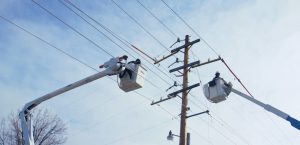
 Since 1880, municipally-owned utilities across the country have used the not-for-profit business model to provide electricity to residents and businesses throughout the nation. These community owned and operated public power utilities, which include 72 municipal utilities in Indiana, have traditionally provided economic and reliable electricity to serve those within their communities. The unique qualities of public power and the value of municipally owned electric utilities cannot be understated.
Public power communities own their electric utility and operate it through local government, like local schools, police departments, and libraries. Living in a public power community means that your electric utility payments go to your community, rather than a large private company. Instead of making money for shareholders located somewhere else, the money made by a public power utility stays in the community, covering the costs of operation and improving local infrastructure, directly benefiting ratepayers. Without pressure from stakeholders, public power utilities can keep costs comparatively low while still investing in their distribution systems to maintain quality service. Additionally, public power utilities have access to tax-exempt financing options for large projects, unlike investor-owned utilities, which also leads to savings for rate payers. These financial advantages come to surface in comparison studies. In 2025, the American Public Power Association (APPA) reported that public power customers in both Indiana and Ohio experience savings of more than 30% on their electric bills when compared with customers of other utility types.
Beyond cost savings, a public power utility strengthens community connection and provides an indispensable asset to towns and cities. These utilities provide local jobs for community members through employing lineworkers, customer service representatives, metering staff, and more. When the power goes out in a public power community, it isn’t a stranger who goes out to turn the lights back on – it’s a utility worker that is your neighbor, a friend, or a family member who has a genuine stake in the community they serve. This connection deepens a community’s sense of pride and responsibility.
The local control provided by public power also brings about a shared commitment to community. The communities of public power utilities, rather than a corporation, more often out of state, have the final say in how their utilities operate. Locally appointed boards and elected officials decide what rates their utilities charge, when to invest in their system, and what improvement projects to pursue. This allows public power utilities to fine tune their operation and budgets to the needs of their community, rather than just trying to maximize profits. Utility customers can attend public meetings, ask questions, and share input directly with the decision makers in their area, giving every public power utility customer a significant voice in their community.
Through these distinctions and more, public power doesn’t just sustain electricity in a community, it bolsters economic vitality, local opportunity, and community spirit. The public power model is built upon community ideals such as transparency, accountability, and effective stewardship of local funds. It’s for these reasons that IMPA celebrates public power, not just during Public Power Week, but through every week of the year. Join us in remembering the value of public power!